
Daily Multi-Bin Swaps for Lexington Job Sites
Daily multi-bin swaps keep active Lexington job sites from stalling when one full dumpster is not enough.
Rubble Jockey coordinates dump-and-return service, staging, and swap timing around the pace, access, and next phase of the job so crews can keep moving.
Daily Swap Mechanics
Rubble Jockey prioritizes multiple daily dumpster swaps for active Lexington job sites.
On active roofing, demolition, and contractor cleanup jobs, one full dumpster can slow the whole site down. Rubble Jockey coordinates dump-and-return service around the job’s actual pace so the next box is where it needs to be before the crew is standing around waiting.
Multi-Bin Staging
Multi-bin staging separates clean fill from mixed C&D on active Lexington job sites.
Some jobs produce more than one waste stream at the same time, and the staging plan needs to reflect that early. Rubble Jockey helps contractors separate inert material from mixed construction debris so the right dumpster is in the right place before the site gets boxed in or the load gets contaminated. When needed, Rubble Jockey can also use simple labeling or color-coding to help keep each container tied to the right debris stream.
Urban Site Optimization
Rubble Jockey plans swaps around tight access, street placement, overhead clearance, and normal jobsite PPE requirements.
Lexington infill jobs, narrow drives, finished surfaces, and street-side placements all change how a swap needs to be timed and staged. Rubble Jockey coordinates container movement around real access conditions so the next move fits the site instead of creating a second problem at delivery or pickup.
Phase-Based Coordination
Swap planning shifts with demolition, cleanup, and rebuilding phases on active job sites.
The right dumpster setup at tear-out is not always the right setup for the next stage of the project. Rubble Jockey helps contractors coordinate container size, placement, and material flow around changing job phases so the swap plan stays aligned with the work in front of the crew.
Documentation Flow
Pickup photos and verified disposal weights support contractor swap documentation.
Fast-turn jobsite service still needs clean records after the container leaves the site. Rubble Jockey documents contractor loads with pickup photos and verified disposal weight records so swap activity, tonnage-based billing, and job documentation stay tied to proof instead of memory.
Project Spotlight:
12 Dumpster Swaps in 2 Days
Rubble Jockey completed 12 dumpster swaps in 2 days for a Spencer Pike project in Mt. Sterling.
The original third-party order was too small for the real pace of the job, so Rubble Jockey coordinated with the third party, adjusted the dumpster flow, and kept the out-of-state operator moving through a 48-hour project. Loads were routed to the Rumpke Montgomery County Landfill.
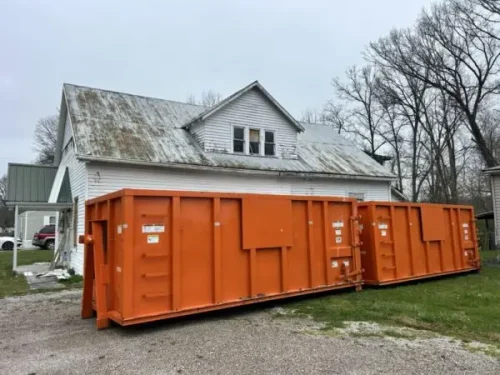
Two Rubble Jockey dumpsters staged in front of the house before demolition began on this Spencer Pike project in Mt. Sterling.
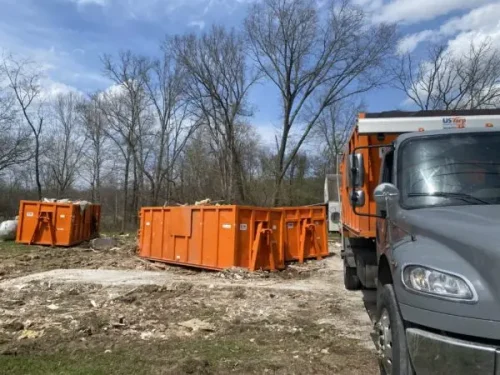
A Rubble Jockey truck beside three dumpsters staged on the ground during a Spencer Pike project in Mt. Sterling.
Frequently Asked Questions
How do daily multi-bin swaps work on active job sites?
- Daily multi-bin swaps keep active jobs moving when one dumpster fills before the work slows down.
Rubble Jockey coordinates dump-and-return service around the current load, the next phase of the job, and site access so the next container move supports the crew instead of stalling the site.
Can clean fill and mixed C&D be staged on the same job?
- Clean fill and mixed C&D should be staged as separate containers when the job allows.
Keeping inert material separate from mixed construction debris helps avoid contamination, protects disposal flow, and keeps the next dumpster move tied to the right material stream.
Do swap jobs still include pickup photos and disposal weight records?
- Fast-turn contractor jobs still need documented billing and load records.
Rubble Jockey uses pickup photos and verified disposal weight records to support swap activity, tonnage-based billing, and cleaner job records that are easier to review later.
How do I adjust the schedule if the job changes at the last minute?
- Last-minute jobsite changes are best handled by direct call or text.
If an active job needs a late pickup change, a fresh dumpster dropped, or the next move adjusted, contractors can call or text Rubble Jockey directly. Rubble Jockey stays close to active jobs and works hard to adjust the schedule around what is actually happening on site.
RIGHT SIZE. FAIR BILL. NO SURPRISES.